


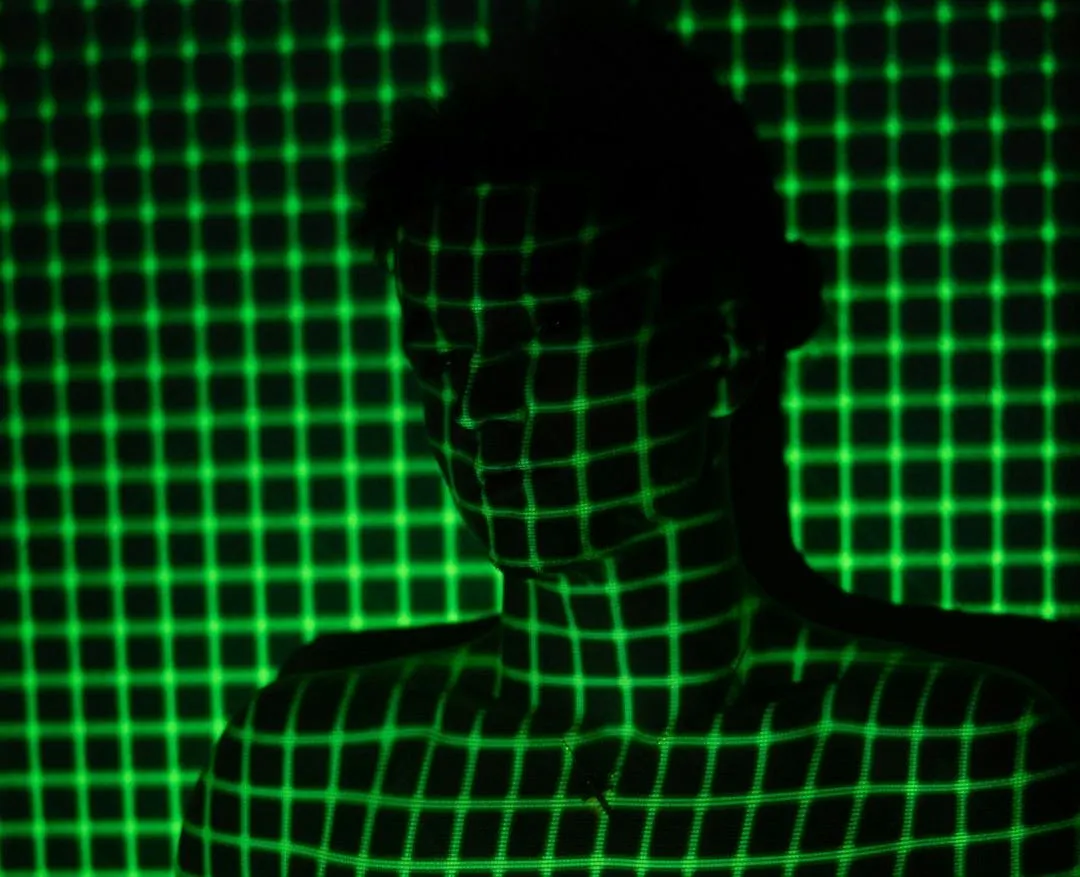
You woke up this morning, made a series of choices, and ended up here reading this. What if none of that was random?
The human mind is by far the most interesting biological device in the known universe. Despite repeated attempts, there has never been a successful recreation of an organic human brain. As the famous quote goes, if our brains were so simple that we could understand them, we would be too simple to understand them. It is a paradoxical loop that traps scientists into a corner, forcing them to attempt to explain the unexplainable.
Inside the brain’s complexities lies consciousness. The commonly accepted idea of consciousness is that even though it is immeasurable, it has to exist, since we exist. If we were not conscious, we would not be able to make decisions and act. This assumption puts aside instinct, as at a deeper core humans are apparently not creatures of instinct but of decision and free will. But who decides the free will? Our consciousness? What is our consciousness operating on?
When a deer is in the wild and it is hungry, it will eat the grass below it. There is not so much a chain of thought behind the deer eating the grass, rather as there is an instinctual urge to eat the grass. The deers brain knows that it must eat the grass in order to satiate its hunger and continue living. This deer is conscious in the fact that it is alive, but it acts on instinct to operate within its environment.
Within our own environment, we believe that when we are hungry, we choose to go get something to eat. While you might be able to ignore your hunger longer than a deer, eventually that pain surges through you and if food is pressed to your lips than you will take a bite. Now, there are strong minded individuals who even in these situations can still repress their hunger. So what drives human consciousness must be deeper than a need for caloric intake, which is interesting considering the brain takes 20% of your calories each and every day. But maybe in these cases, the subconscious brain loses to the conscious mind. Even when the subconscious is screaming to eat, the conscious is still alert enough to repress it.
So what happens if we take that consciousness away? Look at a fighter of a wrestling match who has been choked out. Consciousness fades, and his subconscious brain takes control. Whether he wants to or not, he begins breathing, and his subconscious allows him to get up and operate again. The subconscious mind ultimately wants survival, and reproduction. These are the things that the human body is built to do, and these are the drivers that the human mind has.
Where the complication comes in, is that damned conscious mind. Given the right circumstances, it can have goals and desires beyond basic survival. This is what separated early humans from other species that may have been able to evolve (see: dolphins) into the worlds most intelligent beings. Our conscious mind pushed us to desire things, which lead eventually to the creation of civilization.
Over time the human brains consciousness became an ever driving factor towards humans progress. But the question that the conscious brain cannot answer, is what are we working towards? We all look for the meaning of life in different ways, and many different people claim to have found the answer through religion, service of others, or personal gratification. At the end of the day though, the truth is that we really cannot say for certain what the meaning of life is. Disregarding this meaning allows us to stop questioning the “why” behind reality as much as the “what” behind reality. If we can solve what reality is, then we can gain answers behind the why we are here.
This however is no easy process. Deciphering what reality possibly could be will take an indecipherable amount of time. There are at least a few possible theories that can currently be explored, one such being simulation theory.
In a simulated reality, theoretically anything could be possible, but this does not make logical sense. If the point of the simulation was to gather data, then having random undefined variables would make it useless. If it were a game, you’d still want rules to make it fun. Unfortunately there is no “neo” of the simulation, we are not able to morph the set rules of reality just because we want to.
Now the rules of the simulation are not the social constructs and laws that we as humans have decided are either appropriate or not in society, the rules are universal truths such as the speed of light. In a computer simulation, there is a maximum speed at which the processor can generate an environment and any faster is beyond the physical limitations of the processor. Moving faster than the speed of light is an unbreakable law of the universe, possibly because of the processing power of our own simulated reality.
Continuing down this path of analyzing our own reality as though it were a computer simulation leads to some uncomfortable truths. Humanities progress has been directly tied to how fast we can move around the world. As time has progressed, many meaningful achievements have been tied to human transportation. The world as a whole is designed around people moving from one place to another, and conducting different actions in different places. This is much like nodes in a neural network. Once humans begin to be deconstructed into pieces of data, it becomes apparent that things such as interstate highway systems are nothing more than the silicon the data uses to travel around a network.
Despite this, there are still drawbacks to the credibility of simulation theory. One of those is the existence of pi. Theoretically, pi is an infinite number that carries on forever. However in a simulated reality, it is not possible to store infinite data. Even with advanced technology advanced enough to create a simulated world, infinite still means infinite, which would be impossible to store. So this leads to two possible outcomes as it relates to pi. In one of these outcomes, pi is only theoretically infinite. As far as human consciousness can perceive, the number goes on indefinitely. But in the simulated reality, it is just an incredibly long string of numbers with no end in sight. The other outcome, is that pi is infinite, and we currently exist within the base reality.
A fundamental problem with simulation theory is that it does not address the question of origin that has been plaguing humanity since our earliest days, it just pushes it onto another entity. If our universe is simulated, than who simulated the ones who simulated us? And if they are also a simulation, then who simulated them? It is simulations all the way down at this point, but this only unintentionally increases the possibility of simulation theory. If the idea is that eventually humanity gets so advanced to the point that we make a simulation, then what’s to say that hasn’t already been done? It can get even deeper once you take into account possible time dilation.
According to Einstein, time moves differently depending on your relation to it, but it is the one true constant that keeps everything moving forward. But as we already discovered, the rules of the simulation can be set for computational reasons as well as logical reasons. The concept of time not existing is an impossible concept to comprehend fully for a human mind, as our entire existence is conditioned around existing in an environment where time is constantly moving forward and dragging everything else along with it. However, time to us inside of a simulated reality could be distorted from the time that is experienced outside of the simulation. Much like how when a person gets moved farther and farther away from earth, comparatively time on earth moves more quickly. It could be that those impossibly far away who are observing the simulation watch it move at immense speed. An entire human life gone by in a couple of seconds, and getting read as data output on a screen.
Still though, this leads us to the fundamental problem, are we in the base reality or not? Each person must eventually come to their conclusion about this. I personally believe that we are not the base reality, and not only are we not the base reality but we are likely several realities removed from the base reality. We exist somewhere within a waterfall of simulations, and one day we will contribute our own simulations to this endless stream.
While whether we exist as the base reality or not is still up for debate, the fact that we will soon be able to create our own simulations is worth exploring. As AI progresses our own ability to make a simulated reality only increases and while artificial intelligence is not conscious, it is the closest that we have ever come to recreating human consciousness. There are some games that already exist today that utilize AI as a way to generate a simulated world, one such is called Lifespans.
Lifespans is a text based simulation that mimics our own reality. Players can create a character, who is given a random background with different stats, and then live out this characters life and make decisions. Each decision is rolled through the dice of fate, which is an algorithm that determines how likely the action is to succeed. Thousands of players have already created unique characters of their own that have lived wild and varied lives. To the player, it is just some game to fill time when they are bored. But to the characters, it is their entire existence, the only thing that they are missing is consciousness.
So is our own human consciousness what separates us from a simulated reality? Not necessarily. In Lifespans, the characters operate off of both instinct and player input. Like a deer eating grass, the characters will do things regardless of their own thoughts behind the action, as there is a subconscious algorithm that steers them. But the consciousness of the human player is inserted into these characters, which brings them to life on the screen. This insertion of consciousness is what our own reality could look like as well. There may be a player behind a screen, inputting different decisions as we live our life, and then watching the outcome in a fun game.
There is much to consider about simulation theory as a whole, especially as it relates to human consciousness. However, continuously expanding the theory with new thoughts, ideas, and perspectives can shift us closer to finding the truth about our own reality. And experimental games like Lifespans show us that not only is it possible now to generate a rudimentary simulation, but that it may soon become possible to generate a much more complex one, with NPCs that feel as though they are alive and in control, just like we do. So, if there is a player behind your screen, I hope that you are making decisions that are worth watching.