


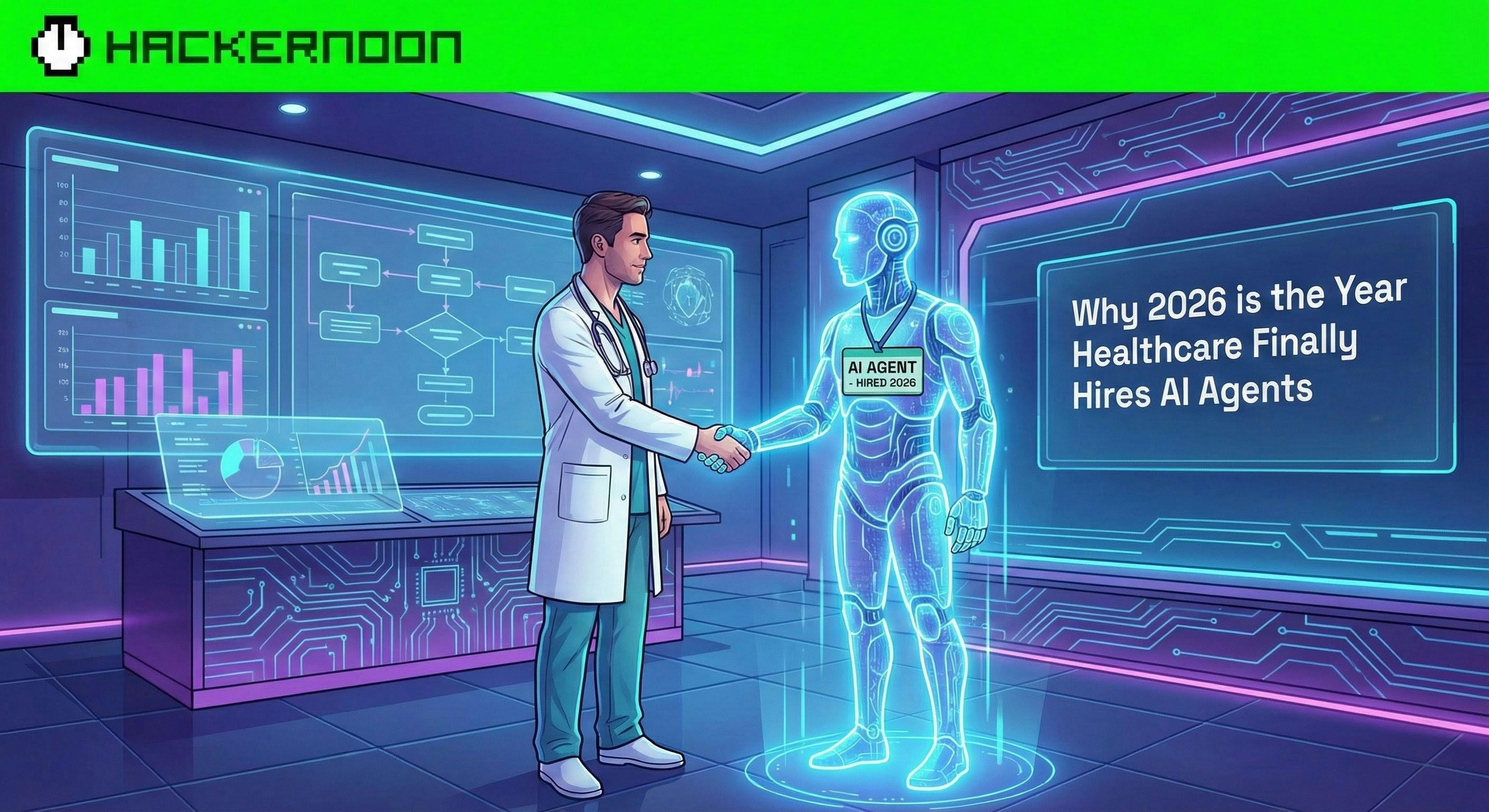
The medical industry is finally stopping the charade of treating software as a tool and starting to treat AI agents as colleagues. We have moved past the era of passive Large Language Models (LLMs) that act like fancy encyclopedias. The current landscape is defined by agentic AI, digital entities that do not just suggest; they execute.
If 2024 was about the "ambient scribe" that sat in the corner recording conversations, 2026 is about the "hireable agent" that navigates the brutal bureaucracy of modern medicine. This shift is backed by staggering market momentum.
The global
The Shift from Scribe to Strategist
For decades, the back office was a graveyard of efficiency.
A clinician would see a patient, a scribe would draft a note, and days later, a human coder would try to reconstruct the clinical logic to satisfy an insurance company. This delay has become a financial death sentence.
Under the latest CMS Interoperability and Prior Authorization rules, if you do not defend your clinical reasoning at the moment of care, you are essentially leaving your wallet open for a payer audit.
Enter the hireable agent. These are not static apps; they are autonomous systems structured around planning, action, and memory. They understand the "why" behind a diagnosis in real time.
"We are defining agentic AI as systems that can plan autonomously and take actions to meet goals," Moghis Uddin, CEO at
Why Context Is the New Currency
Data is no longer the bottleneck. Every health system is drowning in it. The real scarcity in 2026 is context. Clinicians do not need more numbers; they need to know why those numbers matter for the person sitting in front of them.
Agentic systems are filling this gap by acting as the connective tissue across fragmented records. Instead of a doctor clicking through eight screens to find a lab result from three years ago, the agent surfaces it because it recognizes a pattern of disease progression. This is not just automation; it is "hybrid intelligence."
AlethianAI notes that "agents are smarter. They're proactive, capable of making suggestions before you ask for them, and they accomplish tasks across applications.” This moves the needle from identifying a disease to identifying "missing patients," the ones who would otherwise drift out of the care pathway because a human was too busy filling out forms to follow up.
The Rise of the AI-Literate Human
There is a persistent anxiety that these agents will render medical staff obsolete. The reality on the ground looks different. We are seeing the emergence of the AI-literate coder and the augmented nurse. AI and automation in the revenue cycle are expected to generate up to
Instead of chasing doctors for clarifications on illegible notes, billing teams are now denial strategists. They audit the AI and handle complex escalations that require emotional nuance or ethical weight that an algorithm cannot provide. As the industry evolves, the focus has shifted toward "Agentic-AI" as a software system that can autonomously perform specific tasks, making decisions based on data and learning over time.
Defending the Revenue Cycle
The most immediate impact of hireable agents is the end of the "denial spiral." In the old world, payers used AI to deny claims faster than humans could write them. In 2026, providers are fighting fire with fire. Agentic partners create an ironclad audit trail at the point of care. They ensure that the correct workflow is also the easiest one to follow, making compliance a byproduct of care rather than a hurdle to it.
Healthcare has finally realized that it does not need a new hero. It needs better tools for the heroes it already has. By shifting AI from a "product you buy" to a "workforce you hire," the industry is finally reclaiming its time.