


For years, Trust and Safety systems on large platforms have followed a simple rule. Every user gets the same enforcement. Every piece of content is judged by the same model. Every policy applies to everyone in exactly the same way.
This approach is easy to understand, but it is not how people behave. It is not how communities communicate. It is not how cultures express themselves. And it is not how a modern global platform should work.
After spending years building safety and integrity systems, I firmly believe in the role of personalized integrity enforcement to build online safety and improve user sentiments. Though this idea is still new in public conversations, yet inside major platforms, personalized enforcement is a critical direction for reducing harm while protecting expression.
In this article I explain what personalized enforcement really means, why it solves real-world problems, and how we can build it responsibly.
What Personalized Enforcement Means
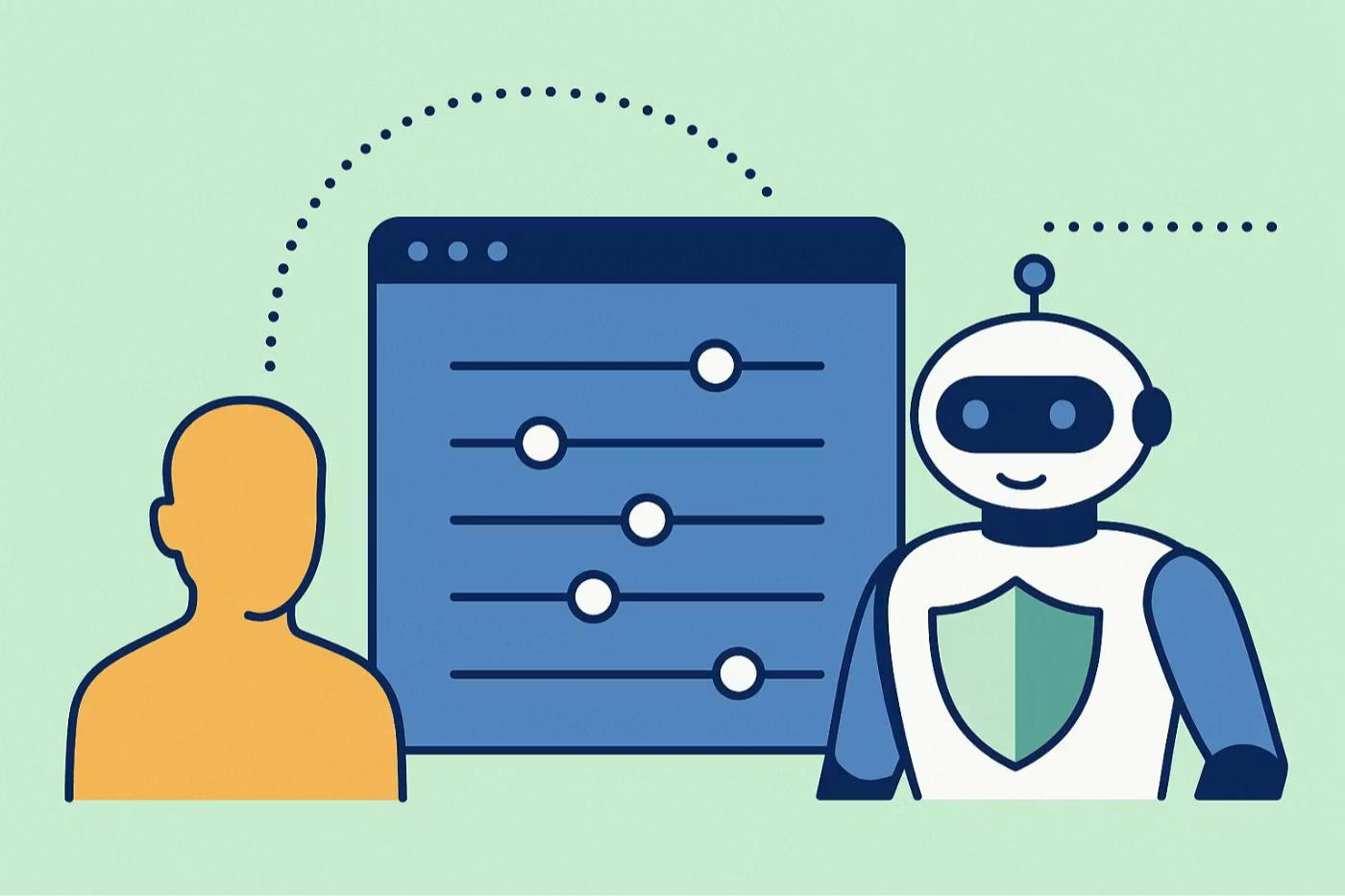
Personalized enforcement means the platform adjusts safety decisions to the needs, preferences, and risk profiles of different users and communities.
Today, most systems take a one size fits all approach. Personalized enforcement asks a better question.
What does safety mean for this specific user, in this specific context, right now?
This is not about favoritism or inconsistent rules. It is about using better signals to provide the right level of protection for the right audience, instead of applying global decisions blindly.
Why One Size Fits All Enforcement Fails
People are different. Situations are different. Culture is different. Content is different. But traditional safety systems ignore these differences.
Here are the biggest problems caused by uniform enforcement.
1. Teens and adults do not need the same protections
A teenager needs stronger safety filters. Adults may want more open expression. Applying the same thresholds for both groups leads to either under protection or over blocking.
2. Culture and language shape meaning
A phrase that is harmless in one culture may be offensive in another. A symbol that is normal in one country may be alarming elsewhere. One global model cannot understand all nuance.
3. Context changes the meaning of content
A video showing boxing is normal in a sports community. The same video can look violent in a general feed. A static model cannot tell the difference.
4. Some users face higher risk
Marginalized groups, new users, and public figures often face more harassment or manipulation. They may need stricter protections.
5. Creators and businesses depend on reach
Over enforcement directly harms creators and small businesses by reducing visibility for harmless content. Personalized enforcement helps avoid unnecessary penalties.
Uniform enforcement tries to treat everyone equally, but ends up treating everyone unfairly.
How Personalized Enforcement Works
Personalized enforcement uses a mix of behavior, preferences, context, and policy to adjust safety decisions for each user or scenario.
Here are the main building blocks.
1. Age and user profile
Younger users receive stronger protections for nudity, bullying, self harm content, and unwanted contact. Adults may receive lighter versions of the same filters.
2. User intent and behavior
A user who regularly watches fitness content might see workout videos that look violent out of context. Personalized models learn the intent and avoid unnecessary restrictions.
A user who frequently engages with political content might get more leniency for heated debate compared to users who avoid these topics.
3. Community norms
Communities form their own languages and styles. Memes, humor, or slang may look unsafe to a general classifier but are normal inside certain groups.
Personalized enforcement recognizes this difference.
4. Regional and cultural differences
Safety systems can adapt to:
- cultural sensitivities
- political contexts
- symbolic meanings
- local languages
- writing styles
This massively reduces false positives.
5. Risk scoring and threat modeling
Users who experience harassment, impersonation attempts, or scam attempts can be flagged to receive stronger protections.
High-risk events can also trigger temporary enforcement upgrades.
6. User preferences
Some users choose a stricter experience. Some prefer more expressive environments. Platforms benefit when users can set their own comfort levels.
Examples of Personalized Enforcement in Action
Here are realistic examples of how personalized enforcement improves safety and fairness.
Example 1: A teen viewing sensitive topics
A teen searching self harm content is shown supportive resources and crisis help.
An adult searching medical content is shown factual information without restrictions.
Example 2: A sports creator posting boxing videos
General feed: video is down ranked slightly due to possible violence.
Sports community: video is treated as normal content because intent is clear.
Example 3: A marginalized user facing harassment
If the system detects repeated abuse toward a user, it increases protections like filtering unwanted messages or restricting who can contact them.
Example 4: Cultural expression
A phrase that is harmless slang in one region is not misclassified as hate speech because models understand the local dialect.
Why Personalized Enforcement Is Hard
Personalized enforcement sounds simple. In reality it requires deep engineering and careful design.
- Models must understand multimodal context
- Systems must avoid introducing bias
- Enforcement changes must be consistent with policy
- Personalization must be safe, not exploited
- Appeals must remain fair and transparent
- Platforms must avoid creating echo chambers
- Human oversight is required for sensitive cases
This is not a pure machine learning problem. It is a combination of policy, engineering, safety science, and ethics.
How We Can Build It Responsibly
Here are the principles to follow.
1. Safety must always flow upward
Personalization should never allow harmful content through. It can only make systems stricter, not weaker.
2. Transparency is essential
Users should know why a decision was taken and how their experience is shaped.
3. Appeals must remain global
Even if enforcement is personalized, appeal rights must be fair for all.
4. Diversity in training data
Models must reflect global languages, cultures, and communities to avoid bias.
5. Human in the loop systems
Humans must review sensitive cases and guide the model.
The Future of Personalized Enforcement
The next generation of Trust and Safety will feel more like healthcare and less like policing. It will focus on:
- prevention
- early detection
- personalized protection
- user choice
- contextual understanding
Instead of one global model deciding everything, we should use layered safety systems that adapt to individual needs while maintaining strong global policies.
This shift should reduce over enforcement, improve fairness, protect vulnerable groups, and preserve healthy expression.
Conclusion
Personalized enforcement is very important for online safety. It reflects how people actually behave, how communities actually form, and how harm actually happens.
Uniform enforcement made sense in the early days of the internet. But at the scale of billions of users, across hundreds of cultures and languages, it is no longer enough.
Personalized enforcement gives platforms the ability to protect users more effectively while respecting the way they communicate and express themselves.
This is not just a technical upgrade. It is a necessary evolution in how we build safe, inclusive, global online spaces.