


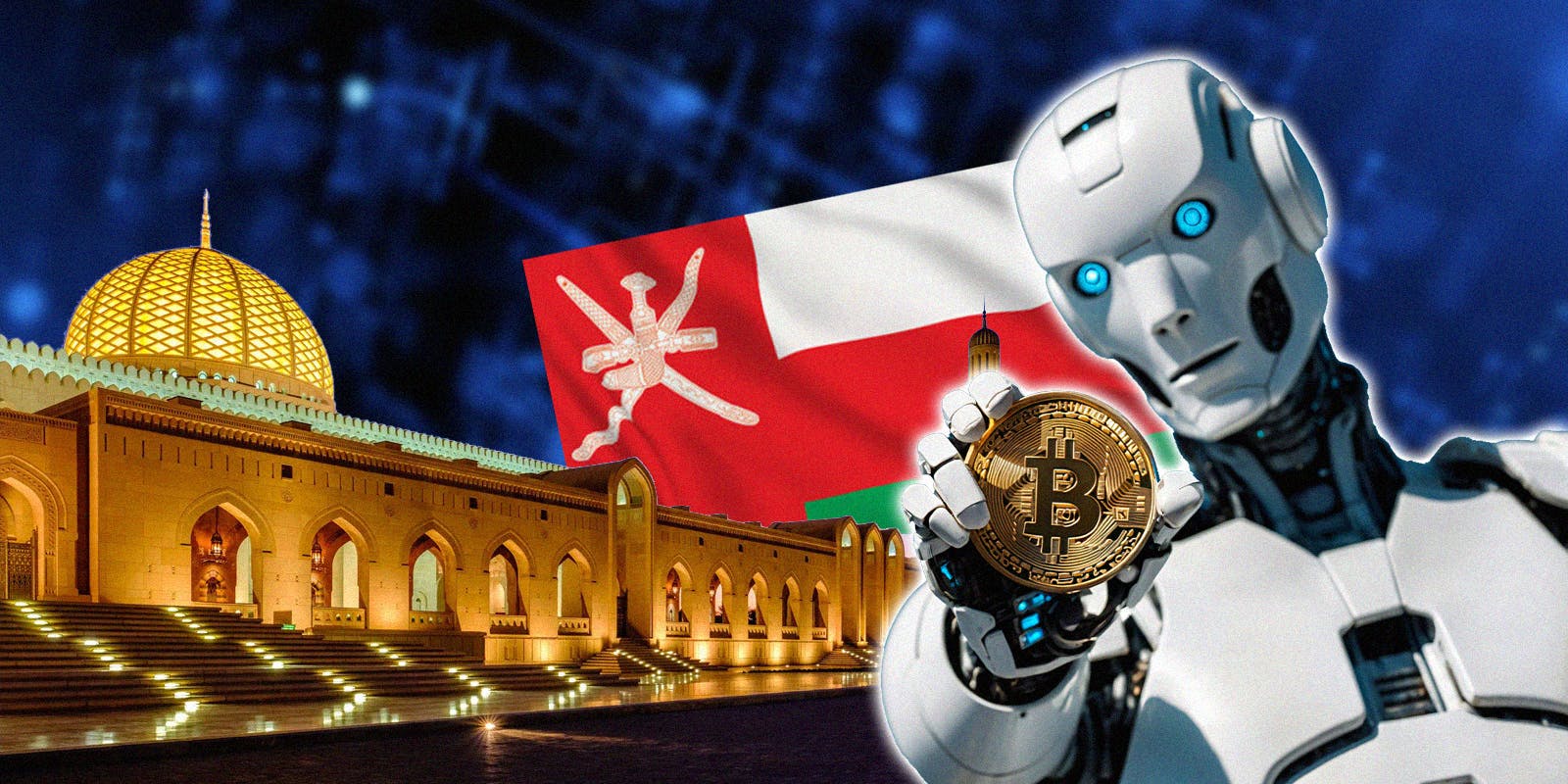
I’ve spent the last decade building and investing in platforms that only work if people know how to run them. Ports, logistics stacks, e-commerce rails, digital property platforms — you can pour money into fiber, servers, and warehouses, and watch them stand like monuments. But monuments don’t move cargo, optimize routes, or reduce friction at customs. People do.
Oman just finished the heavy lifting. The highways are in, the ports are growing, internet coverage exceeds 95%, and non-oil sectors now account for more than 70% of GDP. That’s the boring, crucial part of development — build capacity. The next, far more interesting phase is not about more concrete or more cables. It’s about making the machines we built actually hum. That hum comes from skilled operators, not hardware.
Here’s the thesis: when an economy gets to the “infrastructure built” stage, growth stalls not for lack of tech, but for lack of people who can use the tech to squeeze value out of it.
Oman’s Vision 2040 gets this. The plan isn’t just to add assets; it’s to turn assets into repeatable economic outcomes by investing in human capability.
Why this matters now.
- You can have mobile coverage everywhere and still have only 2–3% of the workforce in ICT. That’s a mismatch. In many modern markets, 40%+ of jobs demand some digital competency. If people can’t use the tools, productivity gains stall.
- Oman’s demographics are a gift: more than half the population is under 35; median age ~30. That’s the raw potential. But young people only drive returns if education and training align with the private sector’s operational needs.
- Enrollment and scale are solved problems: over 60 higher-ed institutions, public spending on education around 5–6% of GDP, and ~30% of graduates in STEM. The next play is relevance — what are graduates actually trained to do day-to-day in a logistic hub or a digital-first energy company?
From execution capacity - the pivot every mature economy faces.
I’ve seen this pattern over and over.
Phase one: build. Phase two: digitize. Phase three: find out that performance is now a people problem.
Tech becomes hygiene; humans become the bottleneck.
Labor-market numbers hide the real friction. Youth unemployment is 10–12% - not because there aren’t jobs, but because education pathways and private-sector needs aren’t aligned. Vision 2040 frames workforce participation as a lever for competitiveness, not a social line item. That’s exactly the right frame.
Talent development isn’t a sprint. It’s an 8–12 year marathon for digital capabilities to diffuse across institutions. Vision 2040’s long horizon is not bureaucratic procrastination - it’s realistic pacing.
Digital infrastructure: available, underutilized, and underrated.
Oman treats digital systems as infrastructure. Digital identity, licensing, e-government, when these are integrated, onboarding and compliance stop being death by a thousand cuts. That’s the kind of infrastructure that makes regulated businesses scalable. For an investor, that’s gold.
But infrastructure alone doesn’t create value. It enables it - if operators know how to use it. You don’t need more bandwidth if the people behind the screens can’t instrument the processes that sit on top of it. My rule: where tech stops being the constraint, hire more people who get the tech.
Why investors are quietly moving to Oman.
Contrast two logics:
- Dubai: velocity, visibility, liquidity. Great if your strategy is quick exits and global signaling.
- Oman: fundamentals, governance, endurance. Great if your strategy is compound returns over a decade.
I chose markets like Oman because the upside is not priced into headline valuations. Entry pricing reflects fundamentals, regulatory alignment favors long-term operators, and competition is still manageable. That lets disciplined capital build defensible positions without paying for noise.
Practical tech adoption here is pragmatic: AI for route optimization and energy forecasting, blockchain for trade verification and identity, and fintech that fits into sustainable regulatory frameworks. No hype cycles. Technology is adopted when it reduces costs and risk, and that’s precisely what makes long-term investing work.
What to actually do (if you care about building, not just betting).
- Build training-for-hire pipelines with operators in mind. Universities and polytechnics must be judged by whether graduates can solve day-one operational problems in logistics, energy, or regulated fintech.
- Invest in “bench strength” of mid-level operators. Senior hires are easy; the real scaling problem is having enough skilled people two levels below the execs who can run and iterate systems.
- Partner with public platforms. Integrated digital identity and licensing reduce friction exponentially, aligning product roadmaps with those national systems.
- Accept slow compounding. Don’t expect 100x in 18 months. Expect steady operational improvements that build defensibility over a decade.
The risk everyone underestimates.
The biggest risk is arriving after the repricing. Markets that scream the loudest rarely offer the best long-term return. Oman isn’t about headlines; it’s about quiet compounding. If you’re patient enough to build real operational capacity, not just buy the story, you’ll find returns that look boring in month 12 and brilliant in year 7.
Final Thoughts
Oman isn’t the flashiest market in the Gulf. That’s the point. It’s the market where you can bet on systems being built for the long haul and on people being the final mile. Vision 2040 is not a branding exercise - it’s a timetable for human capital to catch up with hardware. If you care about operational leverage, about actual execution rather than PR, this is where you should be placing your bets.