Welcome to 2026! That’ll be $12.99 + tax, charged monthly, or you could get an annual subscription for $120 + tax for a whole 22% off!
Sound familiar?
If you’ve interacted with any manner of product or service in the past few years, you know there inevitably comes a point where you have to “pay” to unlock additional features for a holistic experience. As if buying the damn thing wasn’t good enough.
Want to watch YouTube in peace? Pay Google a monthly sub to experience ad-free.
Want to unlock Tesla’s Full Self-Driving? Pay the company a recurring fee.
Want to keep use your HP printer? Yup, you guessed it. Pay the company a damn fee.
Hell, you can now even “rent” a PC from services like NZXT. Which got us thinking, we can’t be the only ones getting tired of all the darn subscription fees. So we got to asking: Which tech sin is most unforgivable in 2026?
Welcome to
This Week’s Poll Results (HackerNoon)
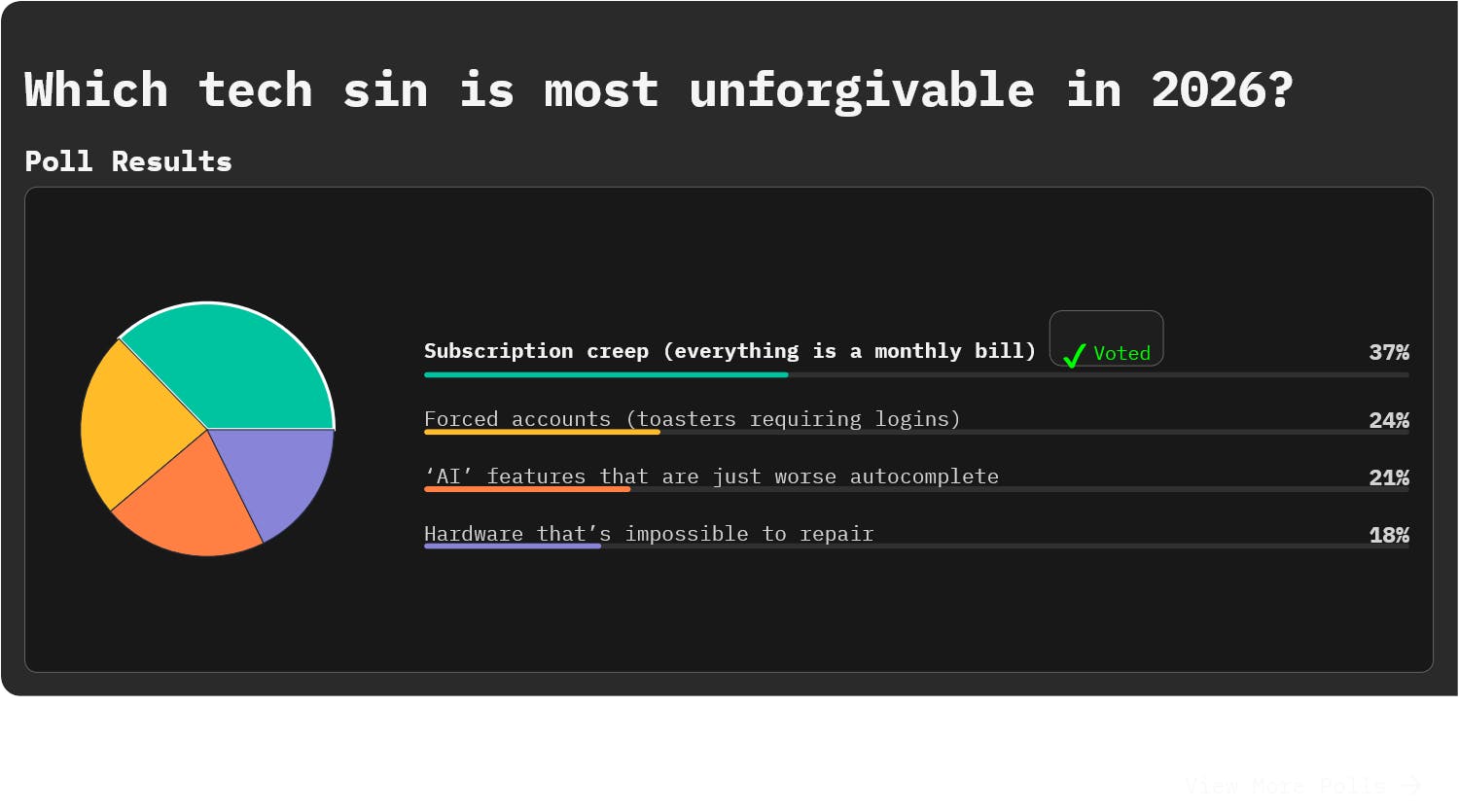
Over 250 readers weighed in on the poll, and here’s how it shook out:
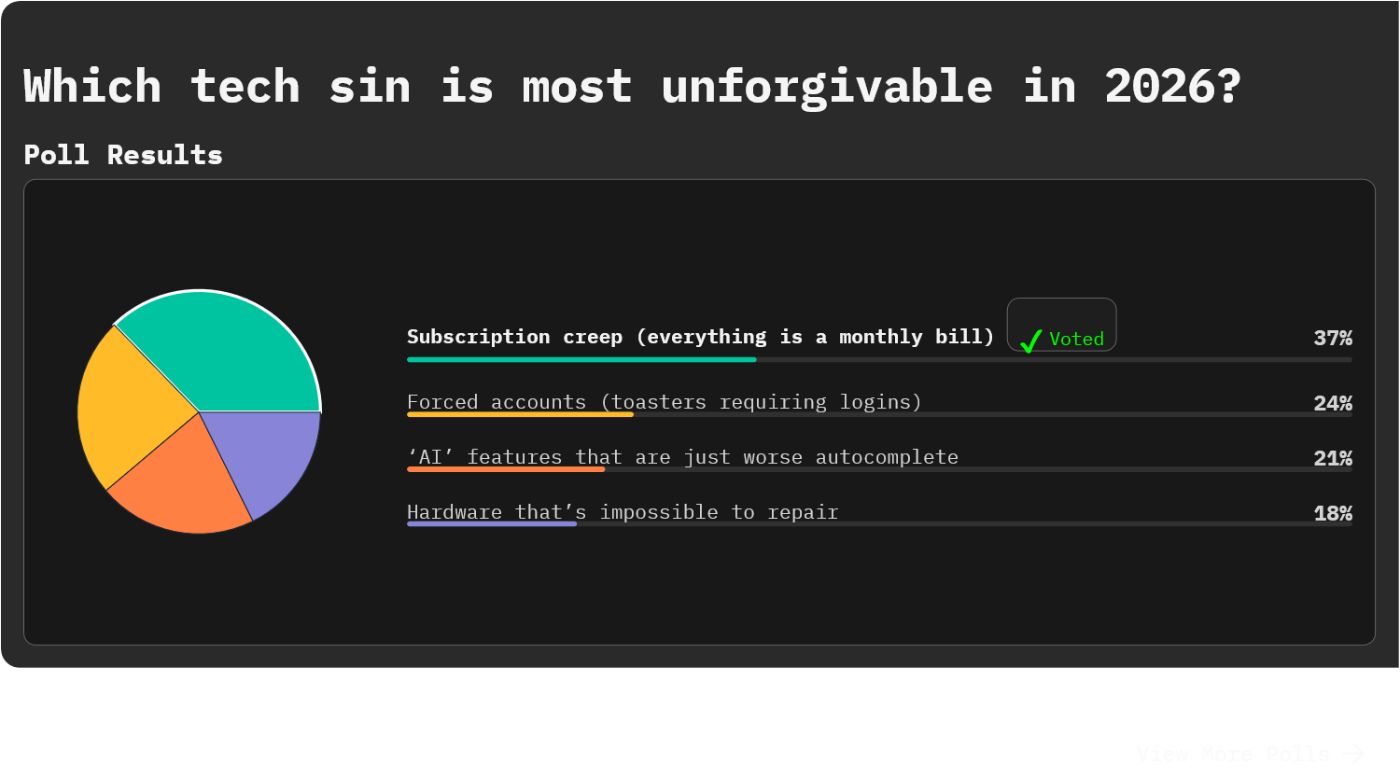
- 37% — Subscription creep (everything is a monthly bill)
- 24% — Forced accounts (toasters requiring logins)
- 21% — ‘AI’ features that are just worse autocomplete
- 18% — Hardware that’s impossible to repair
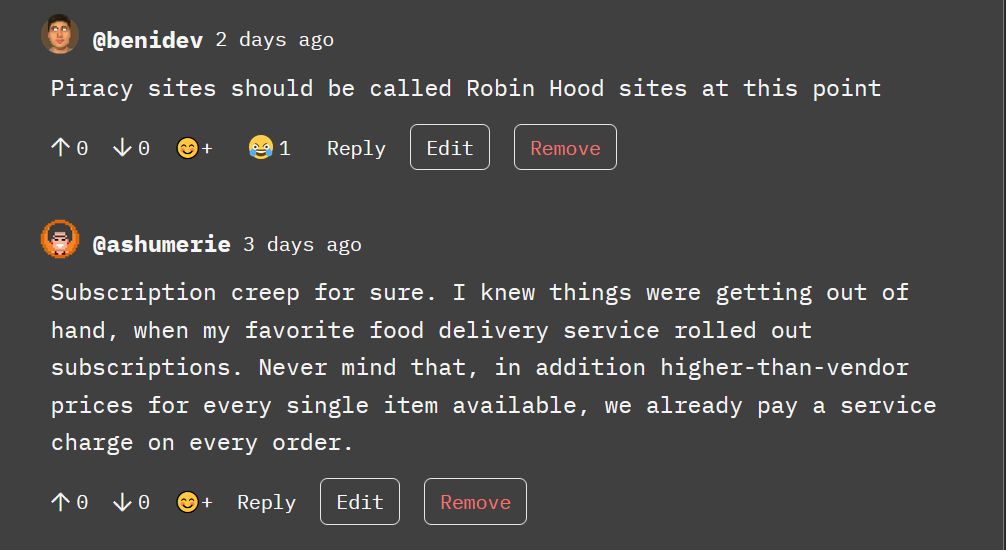
Surprise, surprise. Consumers are sick of having to pay for every damn thing, so much so, that some commentators think piracy is back on the menu baby!
This result tracks with what the last few years have felt like: you don’t really “buy” things anymore. You initiate a relationship with them. Preferably one that renews automatically.
The most visible flashpoints are the ones where companies tried to subscription-lock physical capabilities people assumed were part of the purchase—like car features. And even after public blowback, the idea hasn’t gone away; it just shapeshifts into new bundles and new “services.”
Second place: forced accounts
If subscription creep is the wallet problem, forced accounts are the dignity problem. It’s hard to pitch “user empowerment” in an era when basic device setup increasingly demands a cloud identity, and local/offline paths get quietly sealed up.
To be fair, there’s a serious security argument here. Governments are moving toward baseline security requirements for smart devices (like bans on weak default passwords and clearer support periods).
But users can smell the difference between security and lock-in—and they’re not voting like they’re confused.
Third: “AI” features that are just worse autocomplete
This is the backlash phase of the hype cycle.
One one hand, enterprises are going full steam ahead on AI, while on the other, you can clearly see where they’re doing a shoddy job. The goal appears to be to return shareholder value.
People aren’t rejecting AI as a concept; they’re rejecting AI as a checkbox—shipped into products where it feels half-baked, intrusive, or actively worse than what came before.
Fourth: hardware that’s impossible to repair
Repairability has become political, regulatory, and cultural. In the EU, the Right to Repair push is moving from concept to implementation, with timelines that force manufacturers to plan for repair pathways rather than treat devices like sealed jars.
At the same time, repair is still losing fights in places you’d expect it to win on pure pragmatism—like the U.S. military, where right-to-repair provisions got stripped from the 2026 defense policy process, reportedly amid contractor pressure.
Put the four options together and you get one big meta-complaint:
Users feel like tech is being built for revenue extraction first, and usefulness second.
- Subscriptions extract value over time.
- Forced accounts extract data and control.
- Shallow AI extracts attention and marketing credit.
- Unrepairable hardware extracts replacement purchases.
Different mechanisms, same destination: you don’t fully own your stuff, your choices, or your experience.
You gave us a very clear message this week: stop turning ownership into a trial period.
Let’s hope the execs are listening! 🦸♀️
Well, that’s that! Speak to y’all next time.
🌐 From Around the Web: Polymarket Pick
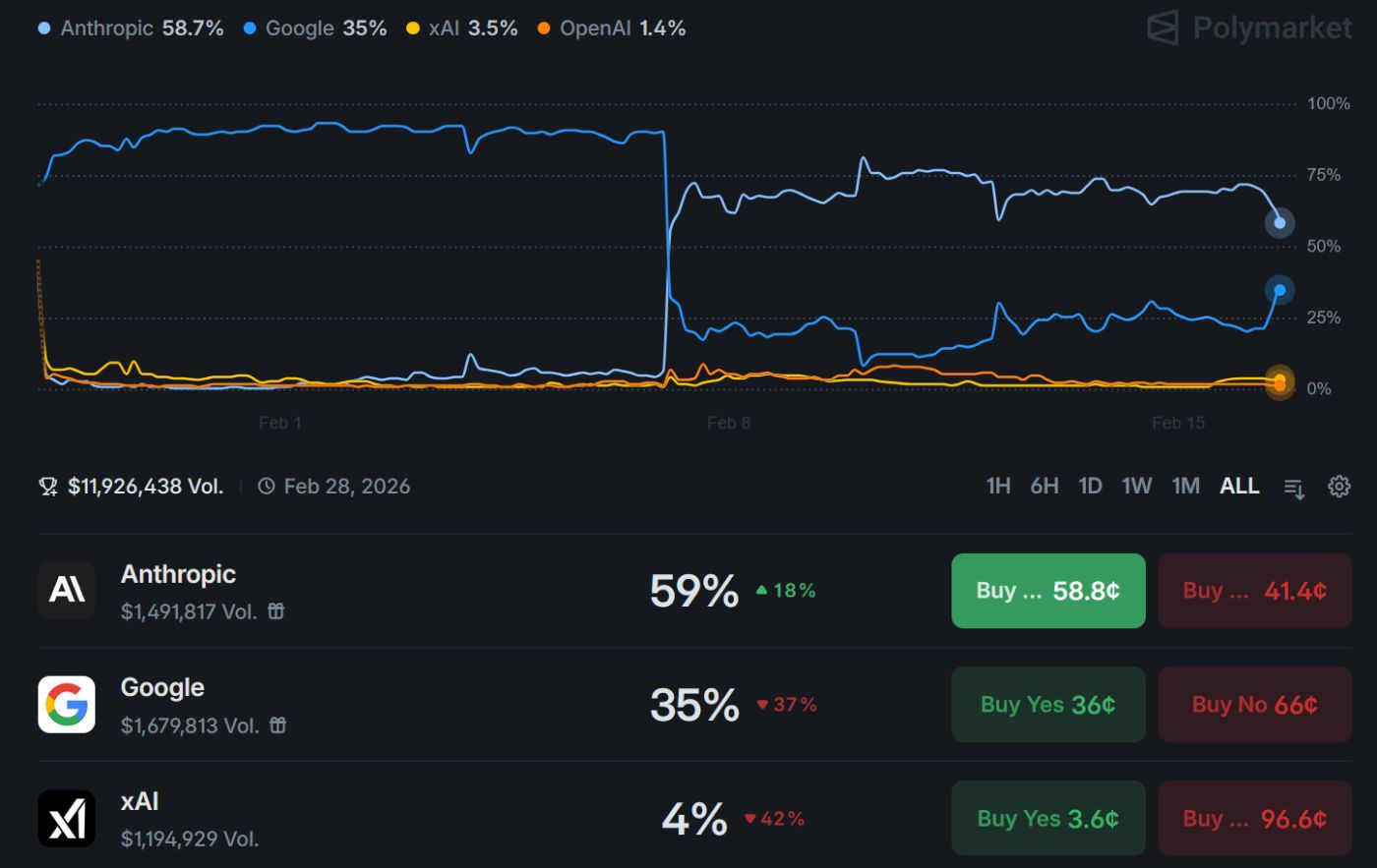
The good folks at Polymarket are betting on which company will have the best AI model by the end of February, with Claude’s Anthropic the clear community favorite. However, Gemini’s Google is not that far behind either.
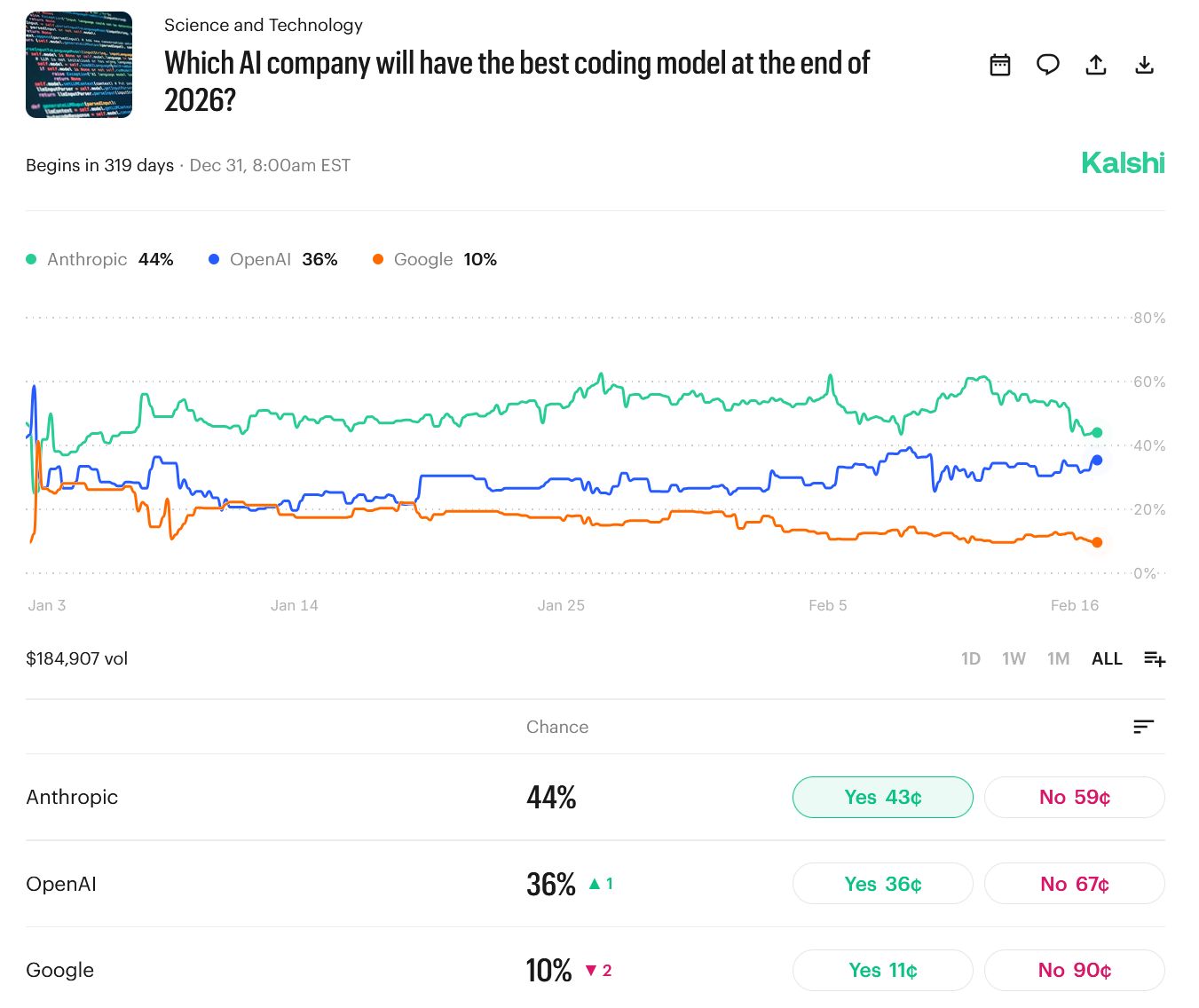
🌐 From Around the Web: Kalshi Pick
Over at Kalshi, Anthropic also appears to be clear favorite for the best coding model at the end of 2026.
We want to hear from you!
Vote on this week’s poll: What's your preferred work setup?
That’s it, folks! We’ll be back next week with more data, more debates, and more donut charts!
[story continues]
tags