


By: Rory Canes
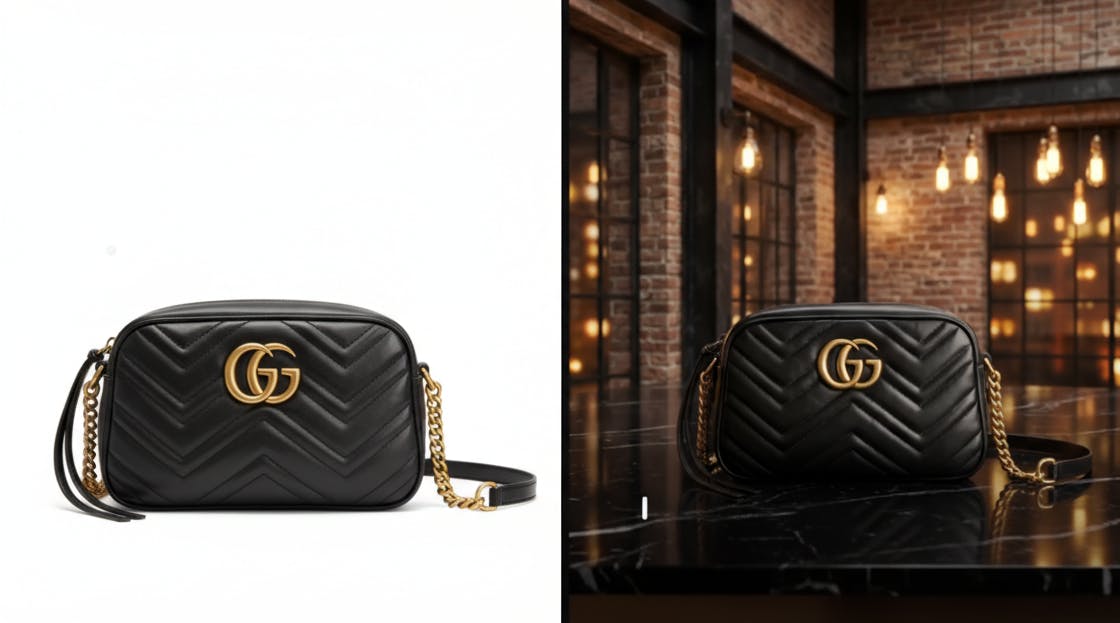
Photo Courtesy of Zakeke
In the arms race for digital attention, e-commerce has discovered a common bottleneck: not ad spend, not strategy, but the sheer grind of visual production.
Behind the launch of its AI Agent Studio, unveiled in February 2026, is a wager that creative production has become the hidden tax on digital growth. The company argues that teams are no longer starved of ideas, only of scalable production capacity, a claim echoed by its chief executive and co-founder, Angelo Coletta, who said that e-commerce teams are “not short on ideas” but “short on scalable production.” By converting existing product assets into what it describes as conversion-ready visuals in seconds, Zakeke positions its platform as both a cost-cutting engine and a creative accelerator.
Inside the AI Studio: Prompt In, Visuals Out
With the launch of AI Agent Studio, Zakeke is targeting what it calls e-commerce’s biggest bottleneck. Every campaign typically becomes a visual production project. One product leads to a fixed set of visuals. Every new variant triggers additional asset work. Photoshoots and retouching slow teams down.
AI Agent Studio reframes that model. Instead of initiating new production cycles, brands can leverage the product assets they already manage to generate unlimited visuals through specialized AI agents. No photographers. No expensive sets. No photoshoots. Visual output scales with the business itself.
AI Agent Studio is not a single monolithic engine, but a coordinated suite of agents trained around specific commerce use cases. The common denominator is the prompt: structured instructions that generate professional visuals designed to remain consistent across channels and formats.
A Specialized Agent for Every Friction Point
The platform is built around dedicated agents, each addressing a distinct constraint in the content lifecycle.
The Product Staging Agent places products into realistic, on-brand environments in seconds, eliminating the need for physical locations and complex setups.
The Virtual Try-On Agent renders embroidery, stitching, prints, and personalization effects directly on real people, producing both images and short videos from prompts.
The Magic Swap Agent tackles “variant explosion,” allowing teams to generate visuals in different colors, materials, and finishes from a single core asset.
The Ad Generator Agent transforms product visuals into ad-ready creatives across formats and placements, accelerating testing cycles for performance teams.
The Multi Image Fusion Agent combines multiple products into a single merchandising or campaign visual, while the Video Generator Agent converts static images into short motion clips, enabling brands to introduce video without extending production timelines.
An Upscaling Agent enhances image quality to produce sharper outputs for PDPs, marketplaces, and marketing placements.
Collectively, the system shifts visual creation from a linear production pipeline to an on-demand capability embedded in the commerce workflow.
Consistency as Infrastructure
Where generative AI often raises concerns about inconsistency and brand drift, Zakeke positions AI Agent Studio around controlled output and repeatable structure. The objective is not novelty for its own sake, but scalable visual throughput.
Integrated within Zakeke’s broader visual commerce ecosystem, which includes personalization, 3D visualization, augmented reality, and virtual try-on, AI Agent Studio is presented as a structural layer of the modern commerce stack.
If it delivers on its promise, the competitive advantage in e-commerce may no longer hinge on production budgets. It may depend on who can turn every product asset into an engine capable of generating consistent, channel-ready visuals at the speed digital retail now demands.
This story was distributed as a release by Jon Stojan under HackerNoon’s Business Blogging Program.