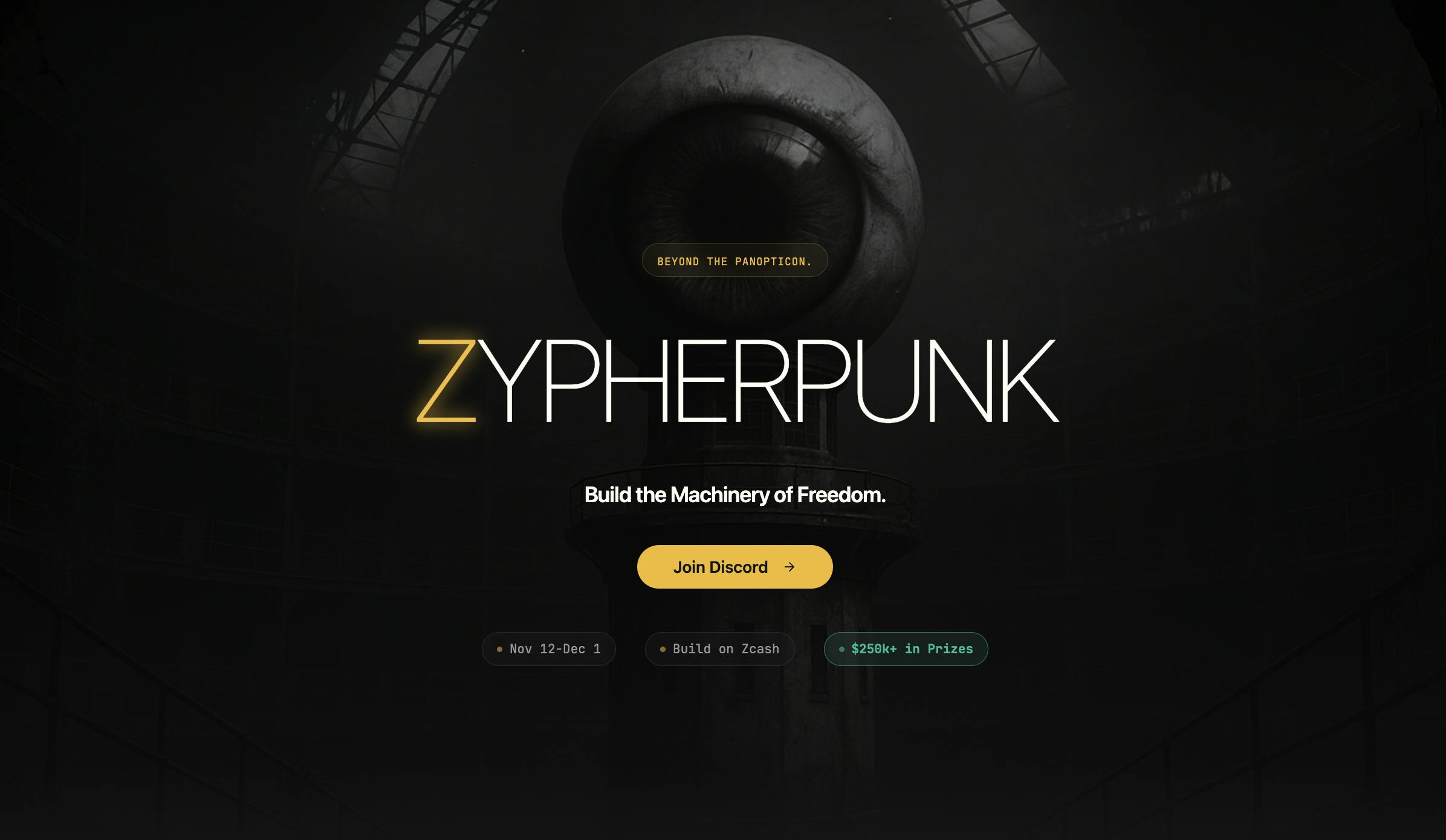
Zypherpunk Hackathon is an annual event that, since 2023, has brought together the best developers of privacy solutions from around the world. Organized in partnership with Zcash Foundation, Starknet, Axelar, and Solana Foundation, the hackathon drives innovation in the field of zero-knowledge protocols and data protection.
The official goal of the hackathon is "Come build the machinery of freedom"—to build the infrastructure of freedom through programmable privacy.

It has become one of the largest events in the world, with a prize pool of $300,000 plus acceleration from top funds, and features a jury composed of crypto legends: Anatoly Yakovenko, Zooko, Balaji, Cobie, and many others.
Currently, there are 273+ submissions (closed until demo day) focused on ZK, shielded DeFi, and multichain privacy solutions.
Next, I will share my personal Top-5 most interesting projects from the list of submissions that impressed me in terms of technology, application, and market potential.
First of all, I selected projects that had an open demo, without requiring registration, etc. I did not risk installing APK versions of apps or registering my email (with all due respect to the developers).
As a true Web3 enthusiast, I only have a blockchain wallet at hand. After all, we are talking about privacy, right?
So let’s get started:
1. Yona
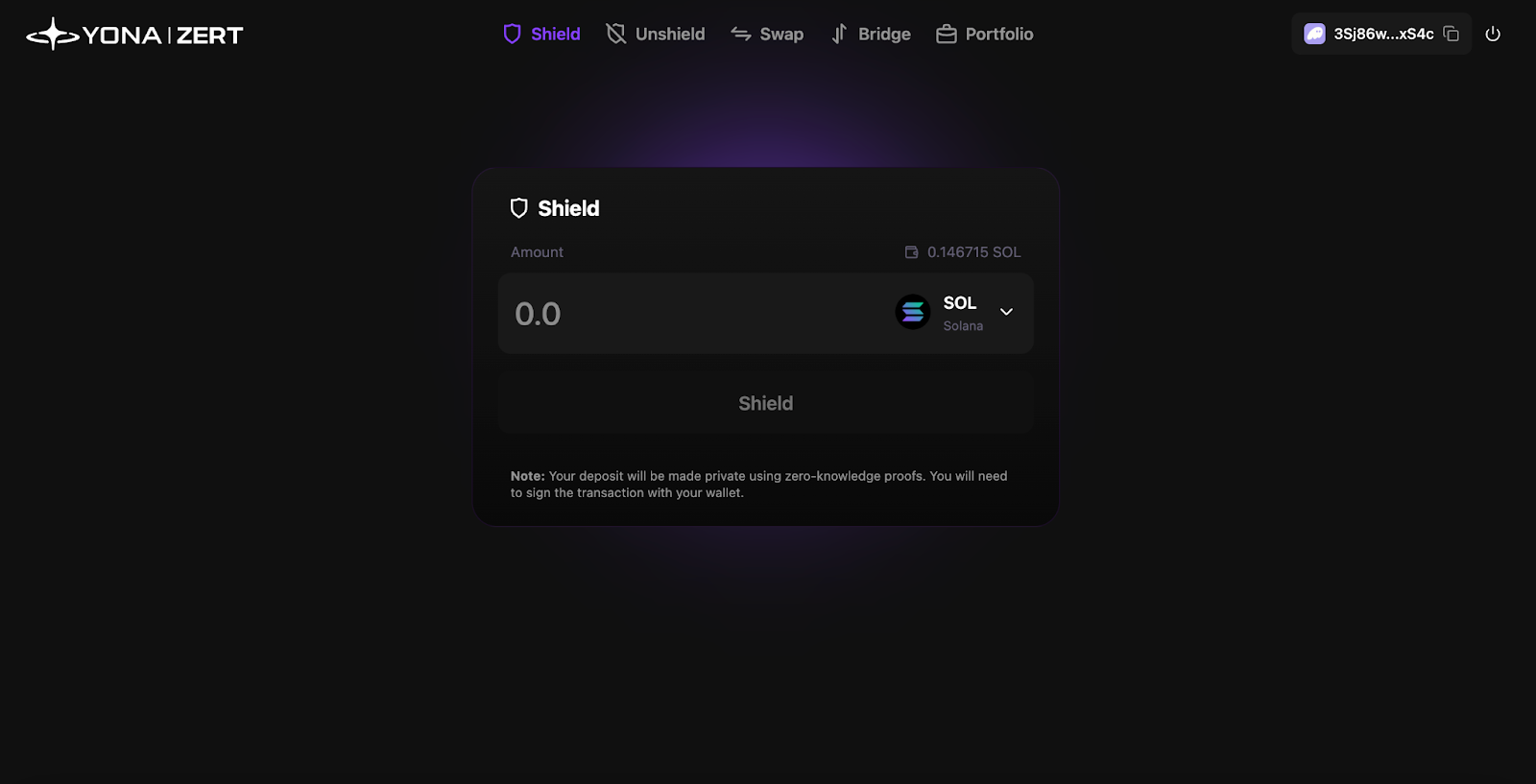
Yona is a new privacy-focused on-chain protocol for Solana. As stated in its description, the project hides on-chain activity while preserving the familiar DeFi user experience. It’s built on a sparse Merkle tree for UTXO commitments and Groth16 proofs, ensuring transaction correctness without compromising scalability (see full review).
What it can do (tested on mainnet):
- Shielding SPL tokens — deposit USDC into a private pool: the amount is hidden, and the address is not linked to the public wallet.
- Private transfers — send SOL to a friend: neither the sender, nor the receiver, nor the amount is visible in the explorer.
- Anonymous swaps — swap via Jupiter Aggregator: the route remains private, the price is market-level.
- Flexible unshield — withdraw to any address with no on-chain links preserved.
The result is a “private balance” — selectively revealing data only when necessary.
The main advantage: zero-knowledge under the hood, yet the interface feels just like Raydium. No need to understand ZK — just connect Phantom and get privacy by default. Transaction cost: around $0.001, with Solana-level speed.
Verdict: Yona solves one of Solana’s biggest pain points — public address and balance visibility. Perfect for traders and HODLers tired of wallet trackers. Awaiting full ecosystem integration. Two founders are listed; no registration required.
2. Zintents
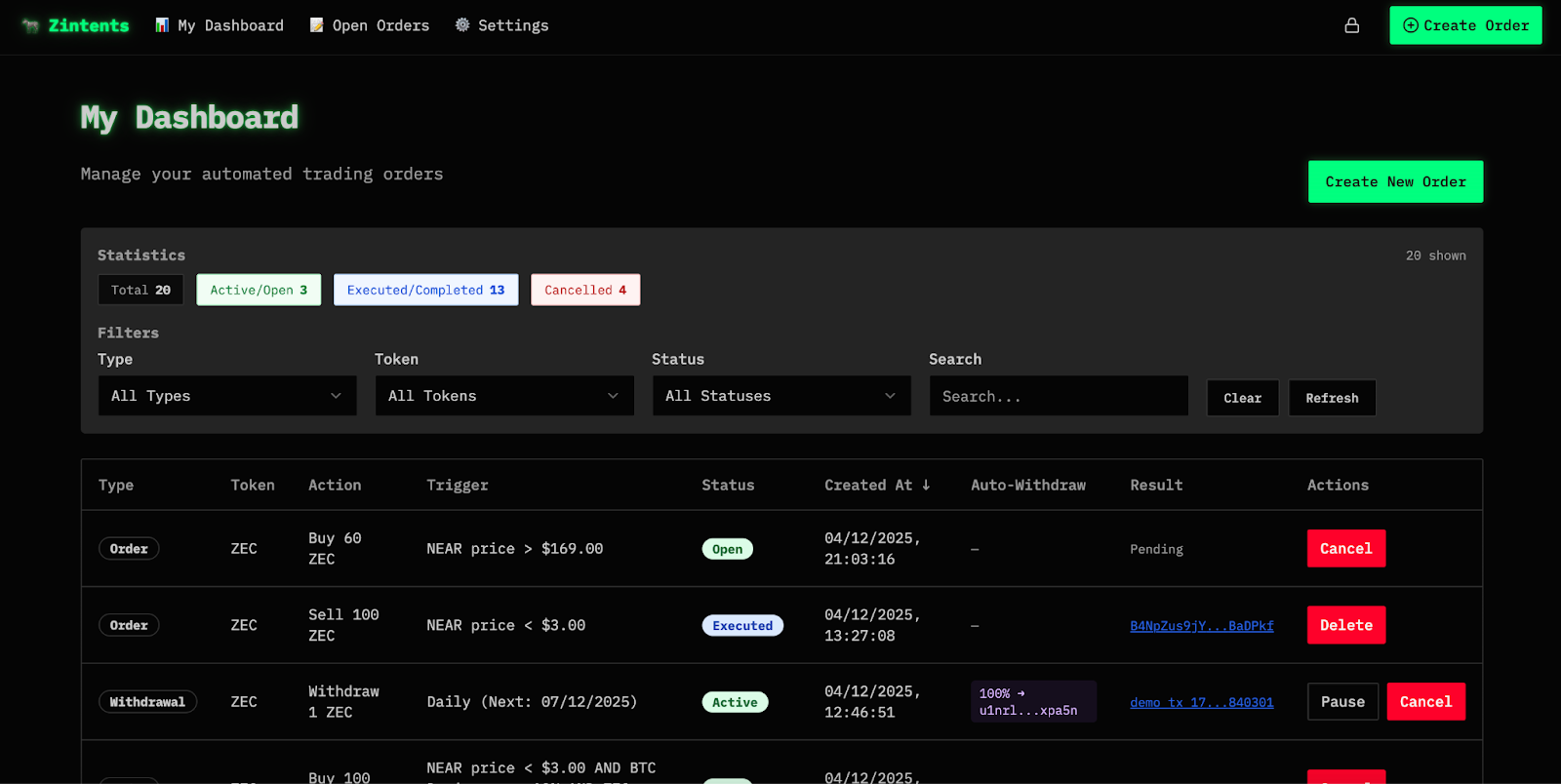
ZIntents is a privacy-focused application for Zcash, built on NEAR Intents. The project automates shielded ZEC withdrawals with full self-custody: keys are stored locally, and the wallet is generated directly on the user’s device.
What it can do:
- Conditional limit orders — place ZEC/NEAR/stablecoin orders based on triggers (BTC price, market cap), with automatic payout to shielded Zcash.
- Scheduled withdrawals — configure jitter/randomization of amounts to reduce transaction linkage.
- Cross-chain intents — for example, swap ZEC → DeFi primitives → private Zcash without any custodians involved.
The key concept of the product: NEAR Intents acts as a “smart intermediary,” executing complex privacy flows (limit orders + shielded payouts) without compromising private keys.
Verdict: ZIntents tackles one of Zcash users’ main pain points — the difficulty of DeFi integrations. It’s designed for HODLers and traders seeking private yield without relying on CEXs. An intriguing bridge between shielded coins and the intents ecosystem. The team isn’t prominently represented, with one founder listed from Vietnam.
3. Secure Polymarket
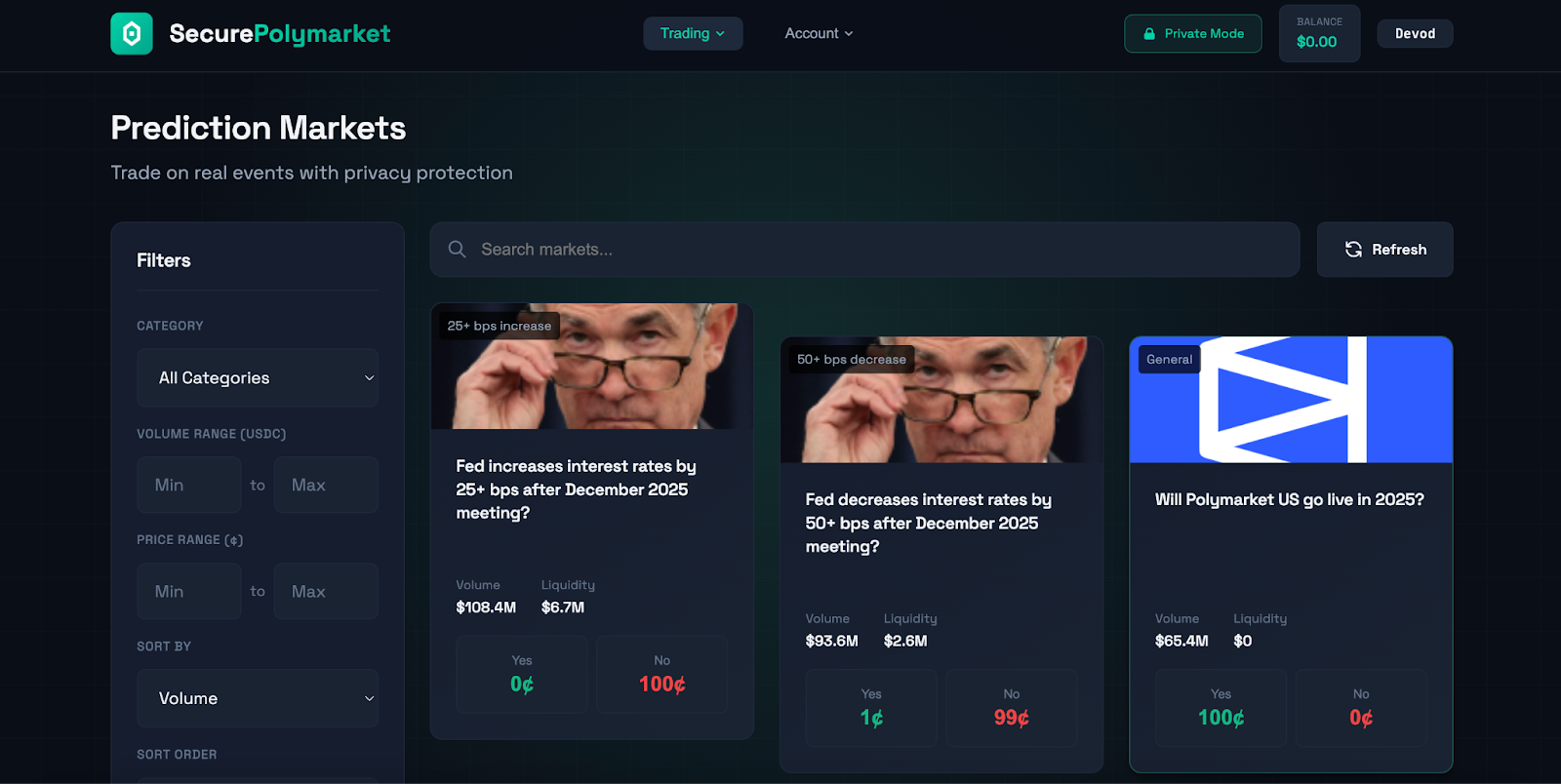
Another product focused on Polymarket, where privacy is critically important. Yes, the wallet is generated by Polymarket itself, but before the balance is topped up, it’s visible to everyone. That’s where the solution from the Secure Polymarket team comes in. Their protocol adds privacy protection on top of the platform, masking addresses, bets, and outcomes. Users can rest assured: anonymity is safe.
Key features:
- Trading outcome tokens without visibility of direction/size;
- Selective disclosure for compliance;
- Protection against MEV on resolution.
The project solves the pain of public prediction markets — the traceability of opinions and capital.
Verdict: Secure Polymarket turns Polymarket from “transparent” into a private tool for whale traders and analysts, where opinion ≠ profile. Perfect for high-stakes markets (politics, sports, etc.).
4. Zassport
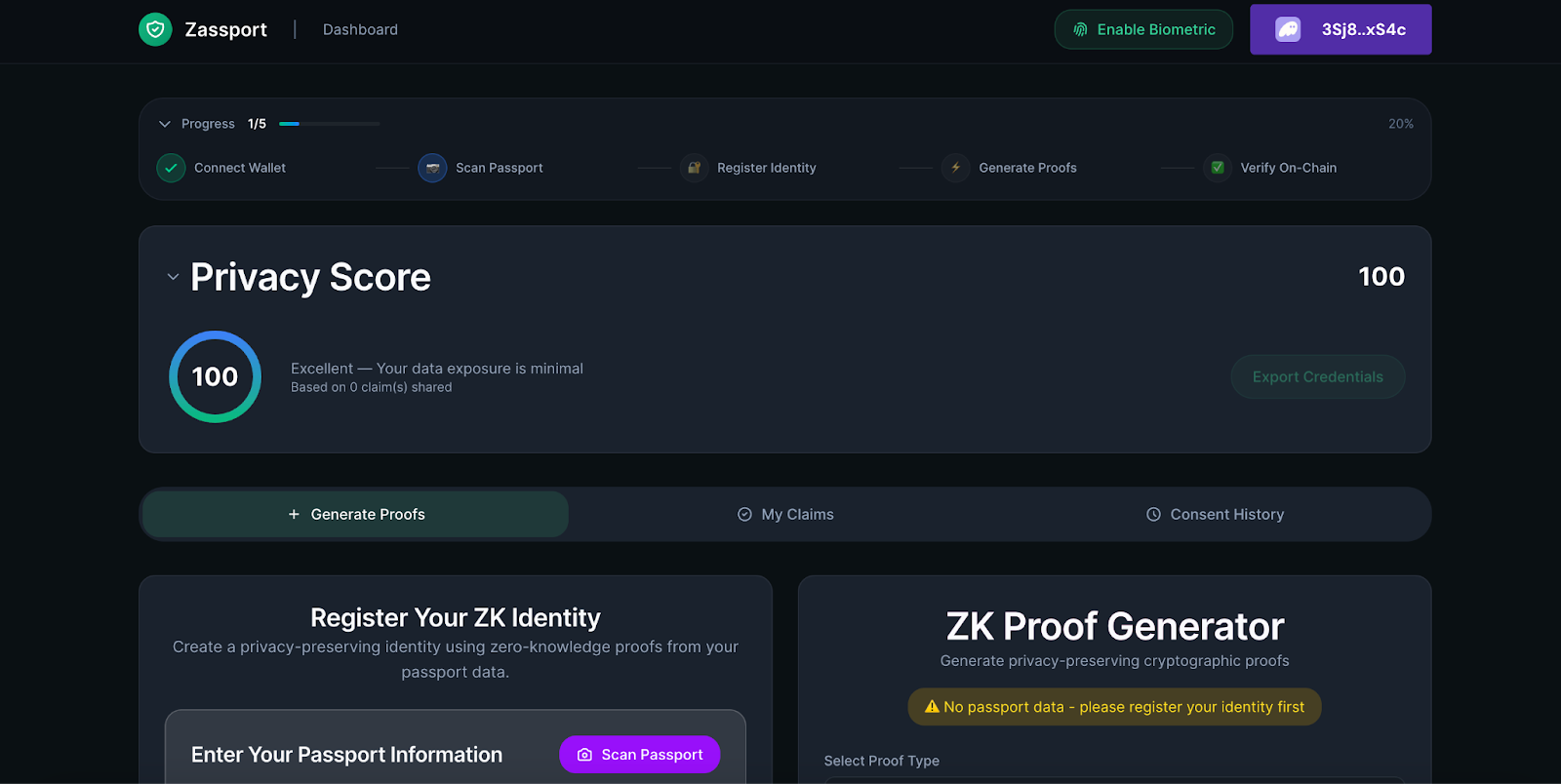
Prove Identity. Protect Privacy. Build Nations. — the Zassport slogan perfectly captures the essence: zero-knowledge passport verification without revealing any data.
Key use cases:
- Private population census for Network States (digital nations).
- Sybil-resistance for projects in airdrops/voting/KYC.
- Reputation system and geo‑based verification (without full disclosure).
Verdict: Zassport is a production‑ready solution for the legitimacy of digital nations. The first practical zk‑census without compromises: privacy + scalability. Personal concern: for now, it is not recommended to scan a real passport — it is a hackathon project, better to use test data. For builders who create nations without a “surveillance state”. The project lists one founder from India, the rest of the team is not specified.
5. zkRune
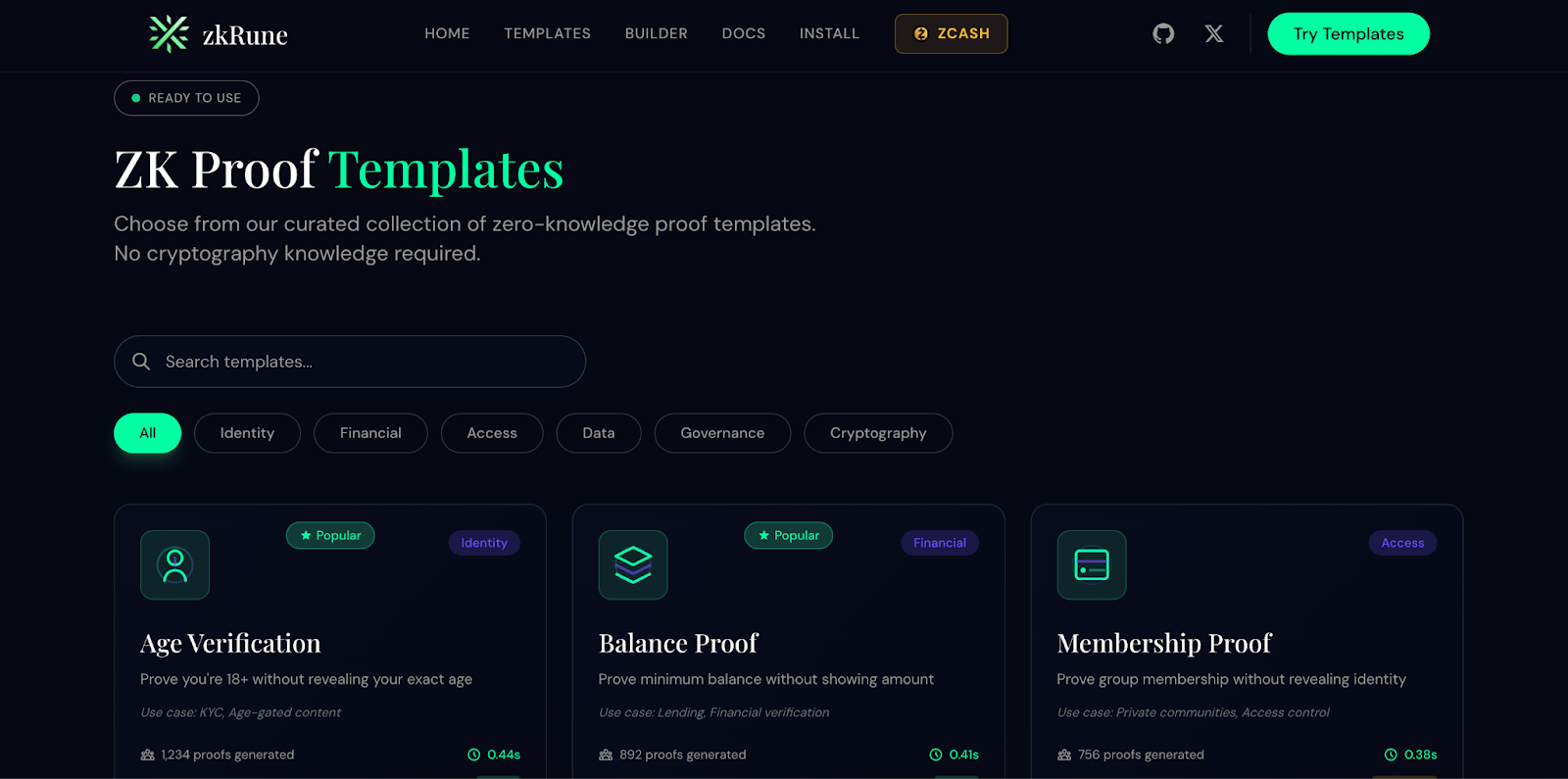
zkRune is a visual ZK-circuit builder for privacy infrastructure. In fact, it is not so much for end users as for developers of privacy applications. With its help, developers can quickly integrate privacy solutions for their project “out of the box”. If this is implemented and the developer finishes the project, it has a strong chance to occupy the niche of privacy marketplace solutions.
Real use cases:
- Prototyping ZK applications — build an “age >18 without passport” proof in 10 minutes and export it to code.
- Privacy SDK for teams — non‑crypto devs add ZK to projects without learning Rust/circom.
- Zcash ecosystem — infrastructure for mass adoption: any project gets ZK via npm i zkrune-sdk.
Verdict: zkRune solves the core pain of ZK development — complexity. It is Figma for zero‑knowledge circuits. For now it is an MVP, but the concept is a killer: privacy stops being rocket science.
Conclusion
These 5 projects, in my view, prove that the privacy concept is evolving from a “niche feature for cypherpunks” into the blockchain infrastructure of the future, which is important for everyone. Both in 2025 and 2026, the trend of programmable privacy will not disappear, but will only strengthen worldwide, especially as more and more institutional players enter the crypto market.
Let’s wish all participants good luck and follow the results at: zypherpunk.xyz | Zypherpunk Discord
The era of “naked wallets” is ending. To have privacy = to own luxury.
[story continues]
tags